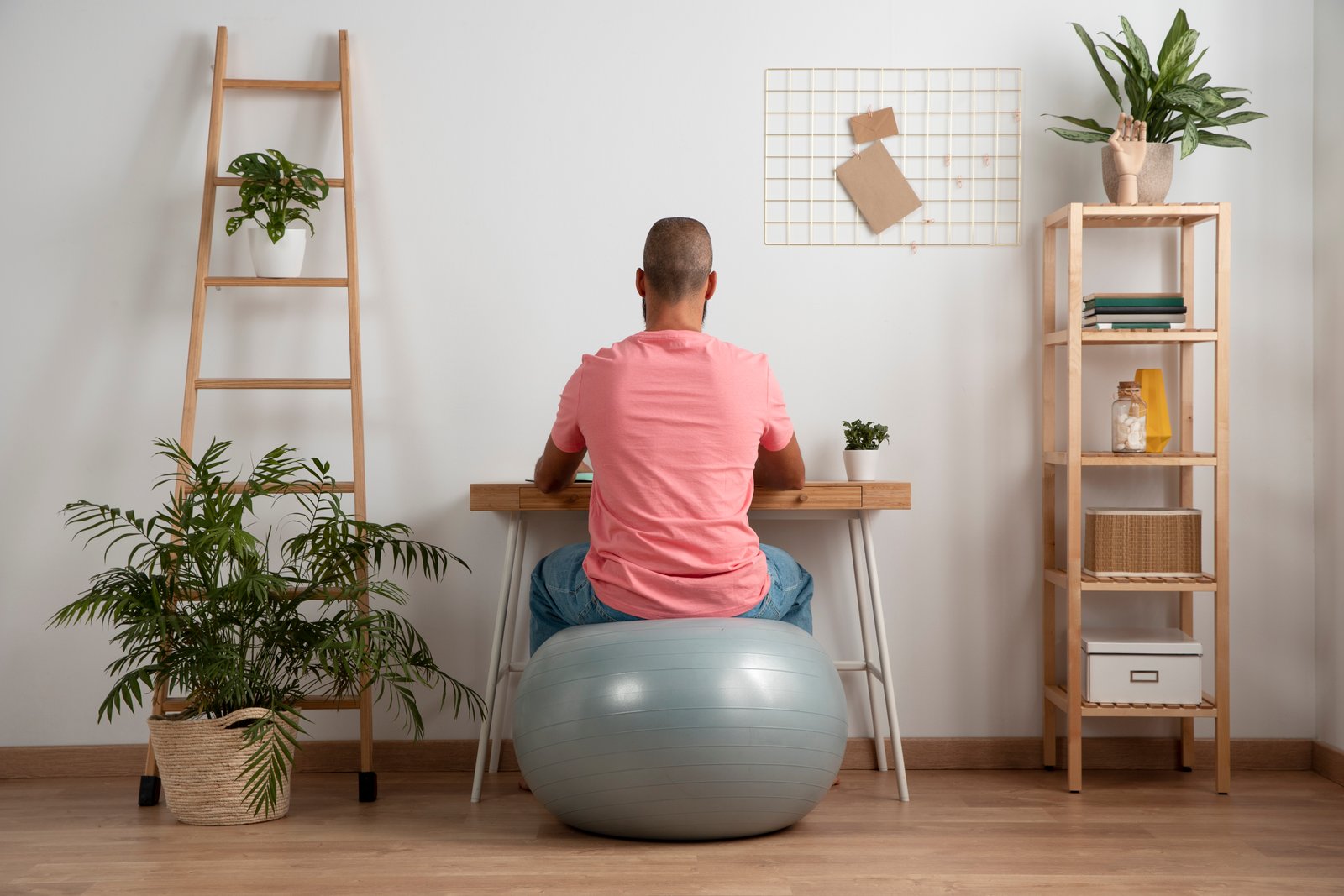
Have you ever thought about swapping your regular office chair for a ball chair? .... While it might seem unconventional at first, a ball chair can make a real difference, helping to improve your posture and relieve back discomfort when used correctly.
A ball chair, often referred to as a Swiss ball, yoga ball, Pilates ball, or physio ball, isn’t just for workouts—it’s also a practical option for those who spend hours at a desk.
Sitting on a ball chair encourages continuous micro-movements that boost circulation in the spine and engage essential postural muscles.
This active form of sitting helps to reduce stiffness and minimize the discomfort associated with poor posture and extended sitting periods.
Research shows that ball chairs encourage continuous pelvic adjustments, which promote better posture and support back health.
Ball chairs can help reduce the negative impacts of sedentary behaviours by engaging core and back muscles, making sitting more active.
Many users report noticeable improvements in back pain and posture with consistent use of a ball chair.
Sitting on a ball chair can lead to a slight increase in calorie burn due to constant micro-movements.
Ball chairs may alleviate pressure on the sciatic nerve by encouraging healthier spinal alignment.
Increased engagement of postural muscles when using a ball chair has also been linked to improved productivity and focus.
Opt for a ball that positions your hips slightly higher than your knees. This allows your thighs to slope gently downward, promoting ideal spinal alignment and helping to prevent lower back pain.
The height or diameter of the ball chair should be at least level with the top of your kneecap when you’re seated.
Lack of Back and Arm Support: Without adequate support, using a ball chair can lead to potential soft tissue or bone injuries.
Reduced Focus: Balancing on an exercise ball requires extra concentration, which can lead to quicker fatigue. The additional mental and physical energy spent maintaining balance might detract from productive work.
Challenging to Maintain Good Posture: Sustaining proper posture on a ball chair can be difficult, increasing the risk of posture-related injuries over time.
Discomfort: Limited support for the buttocks and thighs can heighten the risk of hip joint and leg discomfort or injuries.
Safety Concerns: There's a risk of injury if the ball bursts, especially if landing heavily, which could lead to fractures of the spine or coccyx.
Muscle Fatigue and Pain: Sitting on a ball chair for extended periods can lead to muscular fatigue and discomfort, particularly in the lower and middle back.
Switching to a ball chair can be a valuable change for your spinal health, posture, and overall comfort at work. Incorporating active sitting into your routine not only supports physical well-being but can also enhance productivity and focus.
If you're considering using a ball chair, consult with your physiotherapist first.
They can offer personalized guidance, assess if a ball chair aligns with your specific health needs, and help you maximize the benefits of this dynamic seating choice.





Assistant professor
.jpg)



.png)